
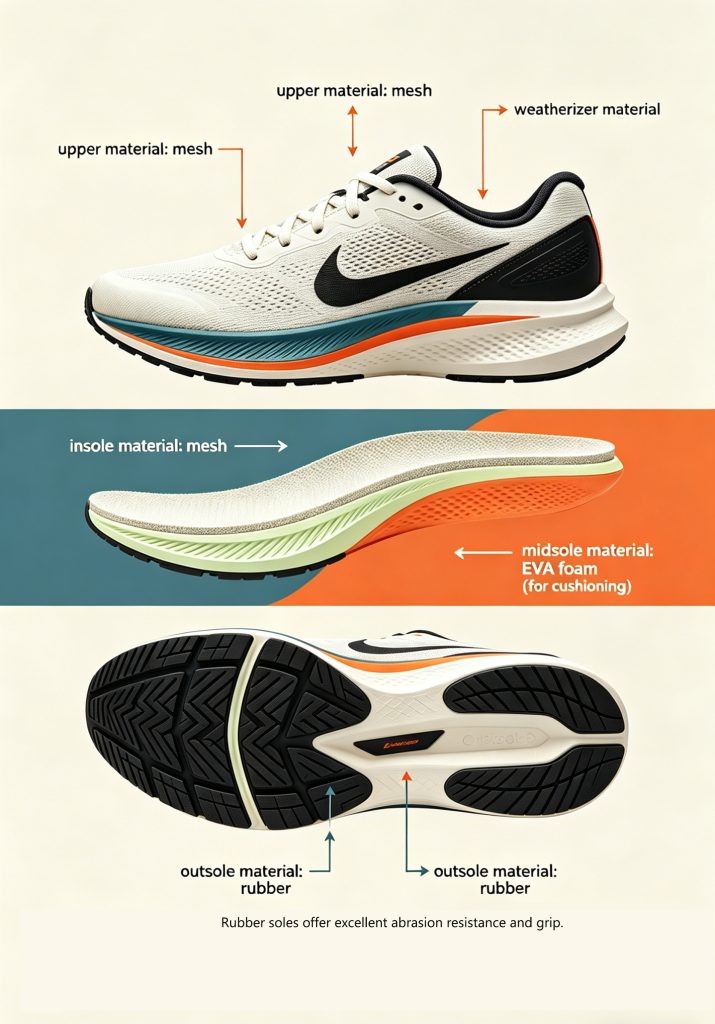
Shoes are commonly made from leather, textiles, synthetics, rubber, foam, and plastics, each chosen for specific properties like durability, comfort, and performance.
Main Materials Used in Shoes
Leather: Leather is a natural material derived from animal hides, most commonly cowhide, but also sheep or pig skin. It is valued for its durability, breathability, and comfort, and can mold to the foot over time for a custom fit. High-quality leather, such as full-grain leather, is often used in formal shoes, boots, and premium casual footwear. Leather types include top-grain (strong and elastic) and split leather (weaker but more flexible), with properties influenced by the animal’s age, climate, and fat content.
Textiles and Fabrics: These include natural fibers like cotton canvas and synthetic fabrics such as polyester or nylon. Textiles are lightweight, breathable, and flexible, making them ideal for casual shoes, sneakers, and athletic footwear. Fabric weight is measured in denier, with lighter fabrics around 110 denier and heavier fabrics up to 600 denier.
Synthetics: Synthetic materials, including polyurethane (PU) and thermoplastic polyurethane (TPU), are man-made to mimic leather or provide specific properties like water resistance, durability, and cost-effectiveness. They are widely used in sports shoes, hiking boots, and budget-friendly footwear.
Rubber: Rubber, both natural and synthetic, is primarily used for outsoles due to its traction, flexibility, and wear resistance. Different rubber compounds can enhance grip on various surfaces, making it essential for running shoes, work boots, and outdoor footwear.
Foam: Foam materials, such as EVA (ethylene-vinyl acetate) or PU foam, are used in midsoles and insoles to provide cushioning, shock absorption, and comfort. Foam is lightweight but compresses over time, so it is often combined with durable rubber in high-wear areas.
Plastics and Other Materials: Plastics like TPU are used for structural support in heels, midsoles, or stability plates. Braided materials, such as rope, are sometimes used in espadrilles or decorative soles.
Material Selection Considerations
Choosing shoe materials involves balancing performance, comfort, durability, and cost. For example, leather offers superior but may be heavier and more expensive, while synthetics provide water resistance and lower cost. Rubber ensures grip but adds weight, and foam enhances comfort but wears faster. High-performance shoes often combine multiple materials to optimize traction, cushioning.