
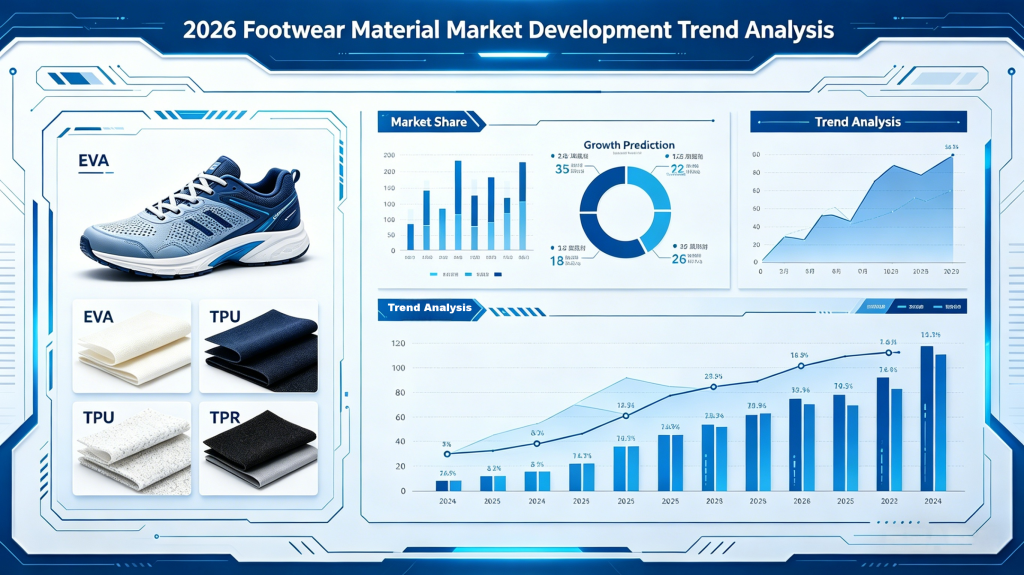
The global footwear material market is embracing dual development in high-end upgrading and cost optimization in 2026.
The overall market size is expected to exceed USD 80 billion, with China accounting for over 40% of the global share. Major elastic footwear materials show clear differentiated trends:
High-end SEBS modified EVA expands rapidly driven by consumption upgrading; TPU keeps deepening functional innovation for professional footwear scenarios; TPR maintains cost-performance advantages in the mid-to-low-end market with recycled material applications. Meanwhile, AI technology has become a key driving force for R&D and production across the whole footwear material industry.
SEBS Modified EVA: Core Growth Driver for High-End Sneaker Midsoles
Driven by consumption upgrading, high-rebound SEBS modified EVA has become the mainstream choice for mid-to-high-end sneaker midsoles.
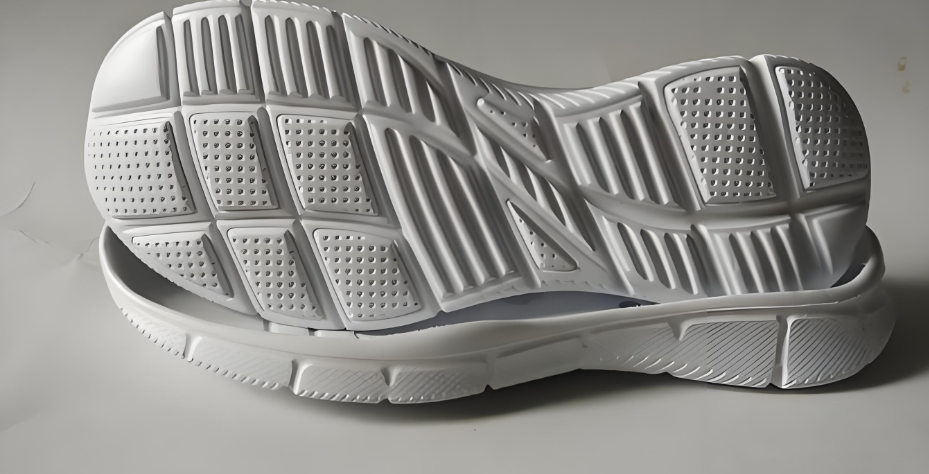
Compared with traditional EVA, it delivers better resilience, fatigue resistance and yellowing resistance, with ultra-low density of 0.25-0.35g/cm³, perfectly matching lightweight demands of running shoes and basketball shoes. Major brands including Nike, Adidas, Li-Ning and Anta have increased procurement by over 20% year-on-year. The domestic market growth rate is projected to reach 15%-18% in 2026.
TPU Outsoles & Midsoles: Functional Breakthrough & Customization
With excellent wear resistance, tear resistance and low-temperature resistance, TPU is widely used in football shoes, hiking shoes and ski boots. Its 2026 development focuses on three directions:
- Lightweight upgrade through molecular structure optimization;
- Zoned performance design with segmented TPU for better cushioning, support and torsion resistance;
- Mass application of 3D printing technology and bio-based castor oil TPU to meet personalized customization and environmental trends.
The domestic TPU footwear material market is expected to grow at 13%-15%.
TPR Soles: Stable Demand & Recycled Material Optimization
Thanks to cost advantages, TPR remains the dominant option for affordable casual shoes, children’s shoes and labor protection shoes. The global growth rate stays at 3%-5% in 2026.
Manufacturers are increasing recycled TPR blending ratio to 20%-30%, complying with global recycled plastic standards and enjoying policy incentives. It effectively balances cost control and environmental compliance.
Technology Trend: AI Becomes Standard for Leading Enterprises
In 2026, leading footwear material manufacturers will widely adopt AI in formula R&D and performance testing.
AI modeling accurately predicts physical properties of SEBS modified EVA, shortening R&D cycle by 30%-50%. It also optimizes TPU segment ratio and recycled TPR proportion, helping enterprises improve efficiency, cut costs and strengthen market competitiveness.
We provide professional supply & customization of SEBS, SBS, as well as foaming footwear material formula & technical support. We also support industry-university-research cooperation for footwear material innovation.
Feel free to connect with us for business and technical communication.
#FootwearMaterials #ShoeMaterial #SEBS #SBS #EVA #TPU #TPR #FootwearIndustry #SneakerMaterial #RecycledMaterials #BioBasedMaterial #ManufacturingTrends #GlobalFootwear #MaterialInnovation#YateNewMaterials