
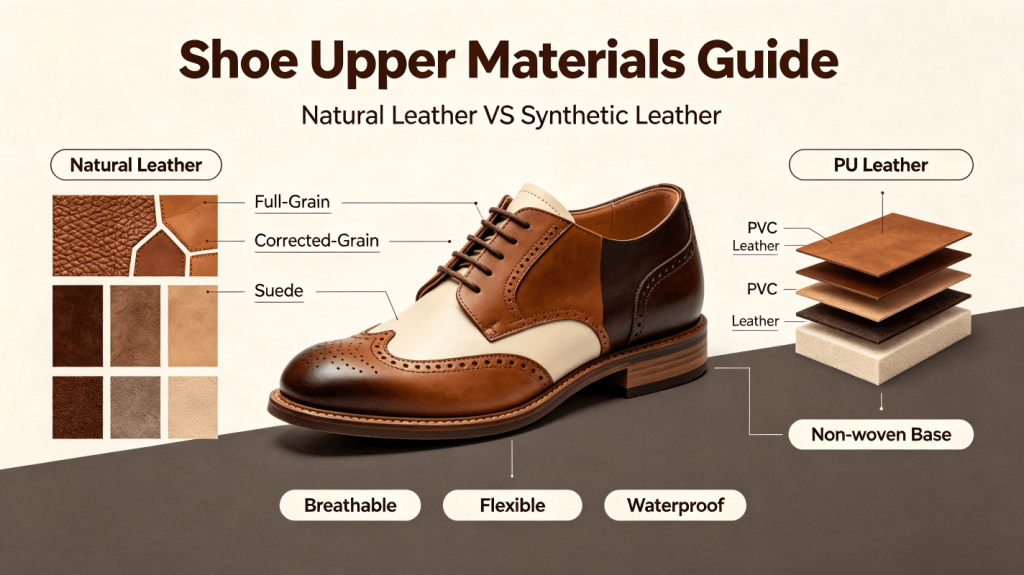
Shoe upper materials determine footwear durability, comfort, texture and production cost. Shoe uppers mainly fall into two major categories: natural genuine leather and man‑made synthetic leather. Each material has distinct fiber characteristics, performance pros & cons for shoe factories and brand buyers.
Natural shoe upper leather mainly comes from pig, cow, sheep hides. It is further divided into full‑grain leather, corrected‑grain leather and suede leather.
1. Natural Genuine Leather for Shoe Uppers
- Full‑grain leather: Retains the original natural grain surface of animal hide. It keeps intact fiber structure, regarded as premium grade shoe upper material.
- Corrected‑grain leather: The original grain surface gets slight finishing treatment during tanning process to cover surface blemishes.
- Suede leather: Processed to form velvet nap on outer or inner hide surface for soft matte texture.
1.1 Hide Zoning & Fiber Structure Characteristics
One whole animal hide is divided into six zones: butt, back, neck‑shoulder, belly, armpit and limb. Different zones deliver huge property differences:
- Butt: Densest fiber structure, high tensile strength, excellent flex resistance. It is the most valuable zone of whole hide.
- Back: Smooth fine grain, good quality, second only to butt section.
- Neck‑shoulder: Fiber slightly looser than back, rough surface with heavy wrinkles.
- Belly: Soft & thin fiber, large elongation, poor elasticity and physical strength.
- Armpit: Located between legs and belly, semi‑circular area, lowest quality across the hide.
- Limb: Animal leg part, stiff texture, small available area, secondary‑quality zone.
1.2 Performance of Different Natural Hides
- Pigskin: Thick subcutaneous fat layer; hairs grow in triangular groups penetrating full dermis. Grain surface is relatively rough. Fiber bundles are thick and tightly interwoven for great strength and abrasion resistance. Obvious performance difference among different hide zones.
- Yellow cowhide: Tiny pores, fine grain, thin epidermis, high tensile strength. Even thickness across zones with minor zone difference for high utilization rate. Butt fibers are compact; belly & shoulder parts are looser; armpit section is soft and thin with small proportion.
- Water buffalo hide: Long hair, thick fleece, loose fiber structure, big zone difference. Bite marks often appear on back section. Fiber is finer but softer than yellow cowhide.
- Sheepskin (sheep): Dense grain, thin epidermis, low tensile strength, high elongation rate, rich fat content. Finished leather is soft and comfortable.
- Goatskin: Similar appearance to coarse‑wool sheepskin with smooth fine grain. Tighter fiber weaving, thick fiber bundles. Soft finished leather with good stretch. Large thickness gap between neck and belly, good flex‑resistance.
- Horse hide: Uneven fiber density across zones. Horse butt section is extremely hard, low water vapor permeability.
- Deer hide: Soft texture, high porosity, good toughness and great elongation.
All natural leather shares common features: good stretchability, breathability and water‑absorbing capacity.
2. Synthetic Leather for Shoe Uppers
Synthetic leather is widely adopted in modern shoe production, including artificial leather and synthetic leather.
- PU artificial leather: Textile fabric backing coated with PU layer.
- PVC foam artificial leather: Textile base with foam plastic interlayer plus PVC surface coating.
- PU synthetic leather: Non‑woven fabric backing coated with PU.
- PVC synthetic leather: Non‑woven fabric backing coated with polyvinyl chloride.
Key Performance Features of Synthetic Leather
- Corrosion resistance: Plastic top coating resists mild acid & alkali; good anti‑moth performance.
- Water‑proof performance: Low water penetration. Easy surface cleaning with damp cloth without losing gloss.
- Uniform smooth surface: Coating covers natural defects, bright colors, consistent thickness.
- Poor breathability: Fiber base sealed by surface coating leads to weak air circulation.
Final Notes for Shoe Material Sourcing
When selecting shoe upper materials, manufacturers shall balance fiber property, zone difference, physical performance and target cost. Natural leather brings premium breathability while synthetic leather offers stable texture, water‑proof and cost advantages.
If you need technical support on shoe upper material selection, feel free to reach out for consultation.
More Information Pls Visit www.yate-tech.com