
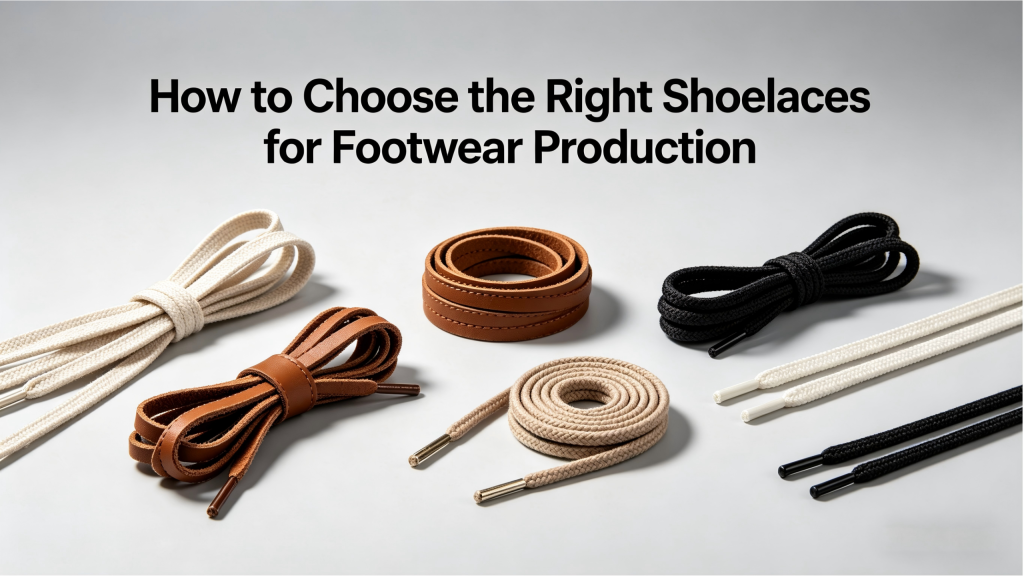
Choosing suitable shoelaces is far more than a minor detail in shoe manufacturing—it directly affects footwear comfort, durability, brand appearance, and overall product positioning. For bulk buyers, footwear brands, and manufacturers, selecting the right shoelace materials and specifications can improve product quality, reduce after-sales issues, and strengthen your market competitiveness. Below is a professional guide to help you make informed decisions for bulk procurement.
1. Understand Common Shoelace Materials & Their Applications
Different materials determine performance, cost, and suitable shoe types. For B2B production planning, matching material to shoe category is essential.
- Polyester (Polyester Filament / DTY) High strength, colorfast, wear-resistant, and affordable. The most widely used material for casual shoes, sneakers, running shoes, and daily footwear. Ideal for large-volume orders with stable quality requirements.
- Nylon (Polyamide)Lightweight, flexible, smooth, and quick-drying. Commonly used in sports shoes, hiking shoes, and water-friendly footwear. Offers good elasticity and long-term shape retention.
- Cotton & Cotton Blends Soft, eco-friendly, and comfortable with a natural matte finish. Suitable for canvas shoes, casual sneakers, children’s shoes, and lifestyle footwear. Provides an elegant, skin-friendly feel but has relatively lower wear resistance.
- Waxed Shoelaces Coated with wax for stiffness, waterproofing, and easy knotting. Mainly used for leather shoes, dress shoes, boots, and formal footwear. Delivers a refined, high-end look.
- Elastic / Stretch LacesWith spandex or elastic core, designed for convenience. Used in kids’ shoes, slip-on sneakers, and elderly-friendly footwear. Supports no-tie wearing patterns.
2. Select Shoelace Width & Length Based on Shoe Style
Improper size leads to uncomfortable fitting and unattractive styling.
- Width
- 6–8 mm: Thin laces for dress shoes, leather shoes, canvas shoes
- 10–12 mm: Standard laces for most sneakers and casual shoes
- 14–20 mm: Wide flat laces for fashion sneakers, skate shoes, and trendy footwear
- LengthDepends on the number of eyelets. Generally:
- 3–4 pairs of eyelets: 70–90 cm
- 5–6 pairs: 100–120 cm
- 7–8 pairs: 130–150 cmCustom lengths are also available for large-scale OEM/ODM orders.
3. Key Quality Indicators for Bulk B2B Purchasing
When sourcing shoelaces in bulk, pay attention to these critical performance factors:
- Tensile strength: Prevents breakage during daily use
- Color fastness: Resists fading, washing, and rubbing
- Wear resistance: Maintains integrity after long-term friction
- Knot retention: Does not easily loosen during walking
- Safety & environmental standards: Reach REACH, RoHS, and OEKO-TEX requirements for global market exports
4. Customization Options to Enhance Brand Value
For professional footwear brands, customized shoelaces help improve recognition:
- Custom colors matching shoe uppers
- Brand logo printing or jacquard weaving
- Special tips (aglets) in metal or plastic
- Reflective materials for safety footwear
- Special textures: round, flat, oval, tubular, twisted
Conclusion
Shoelaces are a small but critical component in footwear manufacturing. Choosing the right material, size, and quality not only improves user experience but also supports your brand’s positioning. Whether producing casual shoes, sneakers, leather shoes, or work footwear, selecting a reliable shoelace supplier ensures stable quality, on-time delivery, and cost efficiency for your production line.
If you need high-performance, customizable shoelaces for bulk footwear production, working with professional Chinese manufacturers ensures stable supply, flexible customization, and compliance with international export standards.